Rome Itinerary: 3 Days (With 2-5 Day Options)
A clean three-day plan for Rome: ancient core on day one, the Vatican on day two, the historic centre and Trastevere on day three. Below it, add-on days to stretch the trip to four or five, or a trimmed version if you only have two.
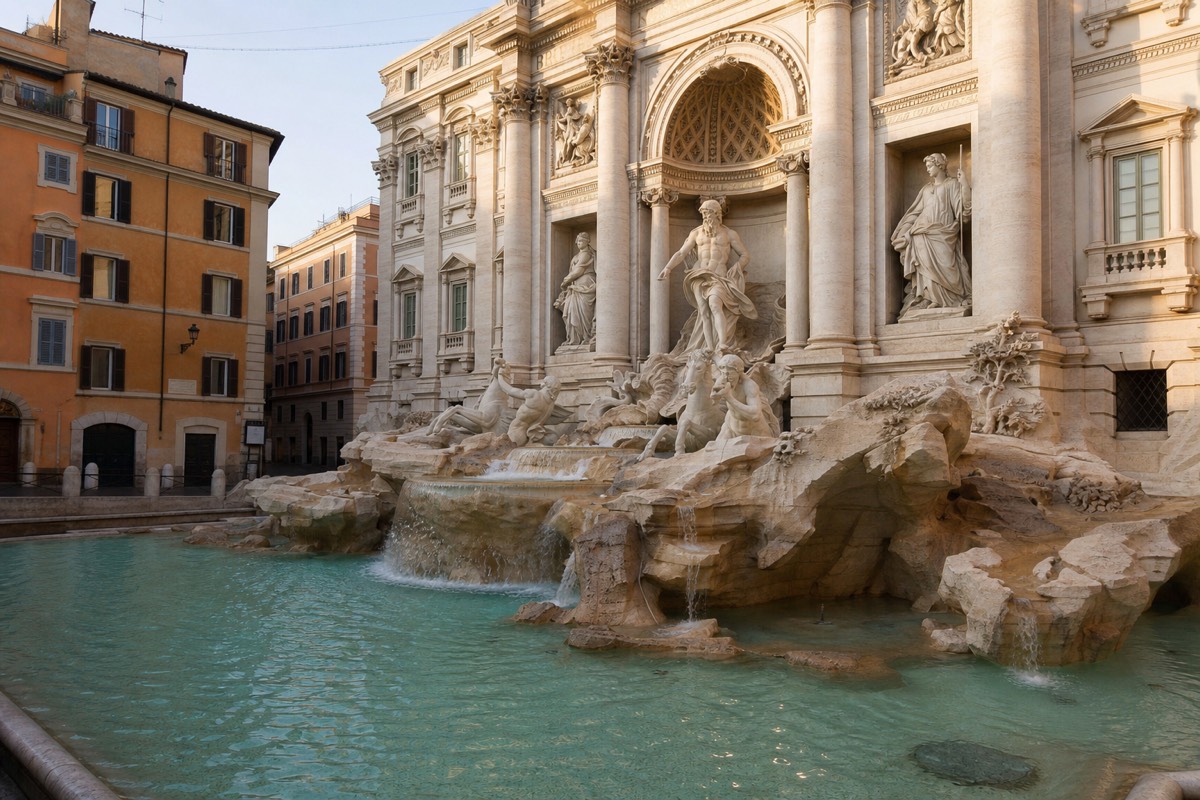
Rome divides into three almost by itself. The ancient city sits in one walkable cluster, the Vatican in another across the river, and the Baroque heart of fountains and piazzas in a third. Line those up over three mornings and you get a trip that feels full rather than frantic. Everything below is on foot or one short metro hop, and the ticket rules are current for 2026.
Three days in Rome, at a glance
The three-day route in order, from the ancient core to the Vatican to the Baroque centre, each day walkable end to end.
What Does The Perfect 3 Days In Rome Look Like?
The cleanest three-day plan gives each day one focus: ancient Rome on day one, the Vatican on day two, and the historic centre with Trastevere on day three. Start each morning at opening, keep the walking tight, and hold one evening back for a slow dinner across the river. That rhythm covers every headline sight without a forced march.
This is the split most first visits land on, and for good reason. It matches how the city is laid out, so you are never doubling back across town, and it keeps the two ticketed giants, the Colosseum and the Vatican, on separate days where each gets the room it needs. If you are still weighing the length of your trip, our take on how many days in Rome you actually need runs through the trade-offs. For the ground rules on what to see, the wider guide to things to do in Rome covers the sights this plan strings together.
| Day | Focus | Anchor sights | Book ahead? |
|---|---|---|---|
| Day 1 | Ancient Rome | Colosseum, Roman Forum, Palatine Hill, Capitoline Hill | Yes, timed entry |
| Day 2 | Vatican City | Vatican Museums, Sistine Chapel, St Peter's Basilica, Castel Sant'Angelo | Yes, timed entry |
| Day 3 | Historic centre | Pantheon, Piazza Navona, Trevi Fountain, Spanish Steps, Trastevere | No, mostly free |
Two habits make this plan flow rather than exhaust you. The first is starting early: the big sites are busiest from roughly 10am to 3pm, so a first-entry ticket puts you inside before the coach groups arrive, when the Colosseum is cooler and the Vatican galleries are still calm. The second is keeping the walking clustered, which is why each day here sits inside one district and almost nothing needs the metro. On a full sightseeing day you will still cover six to ten kilometres over cobblestones, so broken-in shoes matter more than any guidebook, and a midday break through the hottest hours is what buys you the energy for the evening.
Lean on the fact that the historic centre is free and open late. Save the Trevi Fountain and the Pantheon for after dark, when they are floodlit and half as crowded, and refill your bottle from the nasoni, the iron street fountains that run cold water across the city for nothing. If the timed tickets and the queuing feel like more admin than holiday, that is exactly the friction a guided package removes, since the operator holds every slot and sets a pace that already allows for all the walking.
Day 1: Ancient Rome, From The Colosseum To The Forum
Spend day one inside ancient Rome: the Colosseum at first entry, then the Roman Forum and Palatine Hill next door, which share one combined ticket. Finish on the Capitoline Hill for a sunset over the ruins. It is a full, monument-heavy day, almost entirely on foot and mostly on uneven stone.
Book the earliest Colosseum slot you can. The interior is quieter and cooler first thing, and an early exit drops you straight into the Forum before the midday coach groups arrive. The standard ticket covers the Colosseum, Forum and Palatine on one dated entry across the archaeological park, while the upgraded tickets that add the arena floor or the underground levels sell out first, so decide early if those matter to you. Walk the Via Sacra up through the Arch of Titus, climb onto the Palatine for the view over the Circus Maximus, then come back down for lunch in nearby Monti, the old workshop district that is now the neighbourhood locals send you to. Late afternoon, cross to the Capitoline Hill and the terraces beside the Vittoriano for the classic golden-hour look back over the Forum. If your feet are done by then, the number of steps here is real, and this is a day where an organised small-group visit spares you the queuing and the map-reading.
| Time | Stop | Notes |
|---|---|---|
| 08:30 | Colosseum interior | first timed entry, booked in advance |
| 10:30 | Roman Forum via the Arch of Titus | same combined ticket as the Colosseum |
| 12:30 | Palatine Hill and the Circus Maximus view | the birthplace of the city, above the Forum |
| 13:30 | Lunch in Monti | a five-minute walk, away from the ticket-line cafes |
| 15:30 | Capitoline Hill and the Vittoriano terraces | Michelangelo's piazza, then the rooftop view |
| 18:30 | Aperitivo and dinner in Monti | short walk back, no transport needed |
Day 2: The Vatican, Its Museums And St Peter's
Day two belongs to the Vatican: the Museums and the Sistine Chapel in the morning on a pre-booked early slot, then St Peter's Basilica, and Castel Sant'Angelo along the river in the afternoon. The Museums are vast, so an early entry is the difference between a great morning and a crowded shuffle.
Reserve a Vatican Museums slot as early as the calendar allows, ideally the first entry of the day, because by mid-morning the galleries funnel thousands of people toward the same Sistine Chapel ceiling. The one-way route ends at the chapel, so pace yourself through the Gallery of Maps and the Raphael Rooms rather than sprinting. St Peter's Basilica is free to enter but has its own security queue; the dome climb is worth the small on-site fee for the view down the nave and out over the square, though it is a real staircase near the top, narrowing as it curves under the cupola. Mind the dress code that applies across the whole of Vatican City: shoulders and knees covered for everyone, or you can be turned away at the door, so a light scarf earns its place in your bag. In the afternoon, walk the Tiber to Castel Sant'Angelo, the round fortress that guards the bridge of angels, then hold the evening for dinner near Piazza Navona. If timed tickets feel like a gamble, our guide to Vatican Museums and Sistine Chapel tickets explains the slots, the dress code and the quieter entry windows.
| Time | Stop | Notes |
|---|---|---|
| 08:00 | Vatican Museums, first entry | pre-booked timed slot, shoulders and knees covered |
| 10:45 | Sistine Chapel | the end of the one-way museum route |
| 11:30 | St Peter's Basilica and the dome climb | free entry, small fee for the cupola |
| 13:30 | Lunch in Prati | the tidy grid behind the Vatican walls |
| 15:30 | Castel Sant'Angelo | along the river, over the statue-lined bridge |
| 19:00 | Dinner near Piazza Navona | the Baroque square lit up after dark |
Day 3: The Historic Centre And Trastevere
Save the best walking day for last. Day three links the Pantheon, Piazza Navona, the Trevi Fountain and the Spanish Steps across the compact Baroque centre, then crosses the river to Trastevere for dinner in its lantern-lit lanes. Much of the route is free at street level, but Pantheon entry and close access to the Trevi basin are paid.
Begin at the Pantheon when it opens, before the queue builds under its 2,000-year-old dome, then drift through Piazza Navona and the Campo de' Fiori market. The Trevi Fountain is busiest at midday and calmest early or late, so time your coin toss accordingly. From the Spanish Steps it is a short climb up to the Pincio terrace and the Villa Borghese gardens for a green break above the rooftops. As evening falls, cross the Ponte Sisto into Trastevere, the old working-class quarter that keeps the city's most atmospheric dinner streets. This is the day to slow down and actually taste the place; our roundup of what to eat in Rome points you past the tourist menus to cacio e pepe, suppli and a proper gelato. Cross early enough to wander the lanes before you sit down, because the quarter is dense with trattorias, wine bars and gelaterias and half the pleasure is choosing. If the day still has legs, the climb to the Gianicolo terrace above Trastevere gives the widest free view over the whole city as the sun goes down.
| Time | Stop | Notes |
|---|---|---|
| 09:00 | Pantheon | paid admission, standard adult rate EUR 7 from July 2026; exemptions apply |
| 10:00 | Piazza Navona and Campo de' Fiori market | Baroque fountains, then the morning stalls |
| 12:30 | Lunch in the centro storico | a few streets off the main squares |
| 14:00 | Trevi Fountain and the Spanish Steps | toss a coin, then climb to the Pincio terrace |
| 16:30 | Villa Borghese gardens | a green pause above the city |
| 19:00 | Dinner in Trastevere | cross the Ponte Sisto as the lamps come on |
What Tickets Should You Book Before You Go?
Pre-book the Colosseum and the Vatican Museums, both of which run on timed entry and sell out in peak months. St Peter's is free but has a security line, and the Borghese Gallery is by mandatory two-hour slot. The Pantheon and Castel Sant’Angelo also charge admission; check their booking arrangements, so those are the reservations that decide whether your mornings flow.
Timed entry is the single most important thing to sort before you fly. For the ancient core, buy through the official Colosseum ticketing site, which sells the combined Colosseum, Forum and Palatine ticket and releases dated slots that vanish fast in spring and summer. For the Vatican, the official Vatican Museums site handles the Museums and Sistine Chapel; the earliest entries are both the quietest and the first to go. Prices and release windows change each season, so check the official pages for your dates rather than trusting an old figure. If you would rather not manage any of it, a guided package folds every slot into one booking, which is the whole point of joining an organised tour.
| Site | Book ahead? | What to know |
|---|---|---|
| Colosseum, Forum and Palatine | Yes, timed entry | one combined ticket via the official Colosseum ticketing; sells out in peak season |
| Vatican Museums and Sistine Chapel | Yes, timed entry | book the official Vatican Museums site; earliest slots are quietest |
| St Peter's Basilica | No ticket, but queue | free entry, security line, small on-site fee for the dome |
| Borghese Gallery (day 4 option) | Yes, mandatory slot | timed two-hour visits, limited capacity |
| Pantheon | Small fee, reserve on weekends | walk-up on quieter days, timed entry when busy |
How Do You Stretch Three Days Into Four Or Five?
A fourth day adds the Borghese Gallery, Ostia Antica or a food-focused afternoon without touching the core three days. A fifth day is the one that reaches beyond the city, to Tivoli's villas, the ruins of Pompeii, or a first look at the Bay of Naples and the coast. Both extensions slot on cleanly at the end.
With four days, spend the extra one on what the tight plan drops first: a timed morning at the Borghese Gallery among the Bernini sculptures, or the ancient port of Ostia Antica, which is emptier and arguably more evocative than Pompeii and sits half an hour from the centre. Day five is where a genuine excursion fits. The best day trips from Rome, from the fountains of Tivoli to the amphitheatre and frozen streets of Pompeii, all work as a there-and-back if you leave early. If the sea is calling, our guide to reaching the Amalfi Coast lays out the train-and-ferry route south, and the wider multi-city Italy itinerary shows how Rome connects to Florence, Venice and Naples once you have a week to play with. One planning note on the fifth day: a Pompeii run is a long there-and-back, close to two hours each way once you count the fast train and the local transfer, so it swallows the whole day, while Tivoli and Ostia Antica are far shorter hops that leave your Rome evening intact. Match the excursion to how much of the day you are willing to spend moving.
| Extra day | City option | Day-trip option |
|---|---|---|
| Day 4 | Borghese Gallery and the Villa Borghese gardens | Ostia Antica, plus the Appian Way and catacombs |
| Day 5 | Testaccio food morning and the Aventine keyhole | Tivoli's villas, a Pompeii day, or the Bay of Naples |
Only Have Two Days? What To Cut
For two days, keep day one and day two intact and drop day three, folding the Pantheon and Trevi Fountain into the evenings. You still see the Colosseum, the Forum and the Vatican; you lose the slow Baroque-centre wander and the unhurried Trastevere dinner that makes three days feel complete.
Two days is the honest floor for Rome, and it only works if both timed tickets are booked and you start each morning at opening. Use the walk back from dinner to catch the Trevi Fountain and the Pantheon lit up after dark, which is when they are least crowded anyway. If your dates are fixed by a two-day window, the table shows what survives the trim. And if you are choosing when to come at all, the crowds and heat swing hugely by season, so our notes on the best time to visit Rome are worth a look before you lock the dates.
A useful way to think about the trim is that day three combines free piazzas with paid Pantheon entry and an optional paid Trevi basin visit, so it is the one you can compress into odd half-hours rather than cut outright. Passing the Trevi Fountain on the way to dinner still counts, and a coin still lands. What you genuinely lose on two days is not a landmark but the slack, the room to sit in a piazza with a coffee and watch the city go by, which for a lot of people turns out to be the part they came for.
| Plan | Keep | Cut or shift |
|---|---|---|
| 2 days | Day 1 ancient core, Day 2 Vatican | day-three sights moved to the two evenings |
| 3 days | all three days as written | nothing; this is the comfortable version |
Where Should You Stay, And How Do You Get Around?
Base yourself in or beside the historic centre, Monti, or Prati near the Vatican, so most of this plan is walkable and the rest is one short metro hop. From Fiumicino airport, the Leonardo Express train reaches the centre in about half an hour, which beats sitting in traffic in a taxi.
Each central district trades on something different. The Centro Storico around the Pantheon and Piazza Navona drops you inside the walkable core but costs the most; Monti sits a short walk from the Colosseum with a real neighbourhood feel; Prati is calm and handy for the Vatican, which suits families; and the area around Termini is the budget and transit pick, well connected but less charming. For a first three-day trip, anywhere in the first three keeps this itinerary almost entirely on foot.
Location saves more time than any other single decision, because a central base turns transfers into ten-minute strolls. Our guide on where to stay in Rome breaks down the neighbourhoods, from the Baroque centre to Trastevere and Prati, and the notes on getting around Rome cover the metro, the buses and the run in from Fiumicino. If you would rather have the hotel, the airport transfer and every timed ticket arranged in one booking, that is exactly what a package does. The team at Rome Tour Packages builds this kind of three-day city break around the same ancient-core, Vatican and centro storico rhythm, and can extend it south. The La Dolce Vita experience is a southern extension visiting Sorrento, Capri and Pompeii, with Rome sightseeing booked separately, and the five-day Ciao Italia trip pairs the capital with Naples. Prices sit on the operators' live listings, so check the current price for your dates before you book.