Colosseum Tickets: Prices, Skip-The-Line & Tips (2026)
The Colosseum sells one entry roughly every few seconds all day, and the difference between a smooth visit and an hour lost on the pavement comes down to which ticket you bought and when. Here is how Colosseum tickets work in 2026: the tiers and their prices, what the standard ticket really covers, how to skip the line, and whether the arena floor and underground are worth the upgrade.
Colosseum ticket tiers at a glance
The three main Colosseum ticket tiers and what each one reaches. Prices are recent bands; the official ticketing site shows the current figure.
How Much Are Colosseum Tickets, And What Does Each Tier Include?
The standard combined ticket is around €18 plus a small online booking fee and covers the Colosseum, the Roman Forum and Palatine Hill; the Full Experience with the arena floor runs from about €24, and the official Underground and Arena ticket is €24, or €32 with the educational tour. Prices shift, so read these as recent bands and confirm the current figure on the official Colosseum ticketing site.
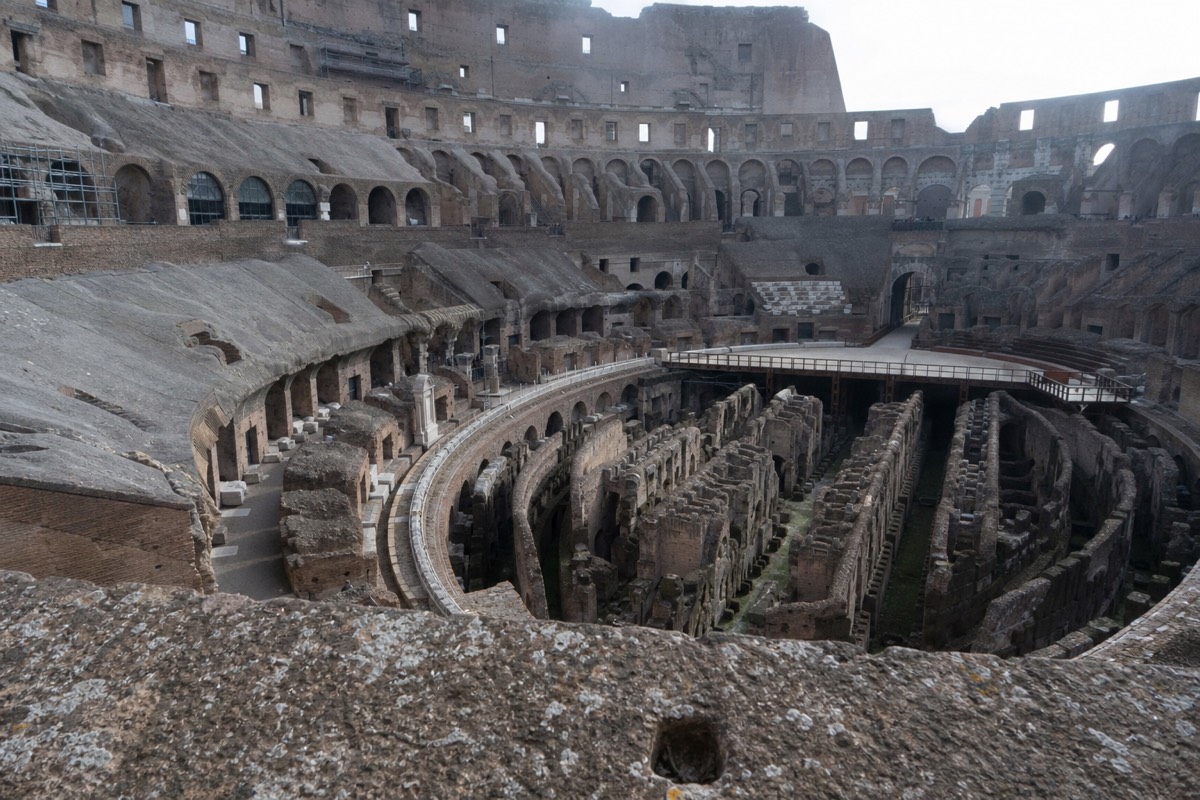
Every tier bundles the same archaeological park: the amphitheatre plus the Roman Forum and Palatine Hill next door. What changes as you climb the tiers is how much of the Colosseum itself you can reach. The base ticket keeps you on the standard visitor levels. The Full Experience opens the reconstructed arena floor where the gladiators fought, and the top tiers add the underground hypogeum, the network of tunnels and cages beneath the floor, along with the upper belvedere on some tickets. Night tours and the attic level appear seasonally as special guided visits at a higher price.
Reduced and free categories cut across all of this. Citizens of European Union countries aged 18 to under 25 pay a reduced rate of a few euro, and under-18s of any nationality enter free, though a free ticket still books a timed slot. Non-EU adults pay the full rate. If you are lining the Colosseum up against the Vatican Museums and the rest of a short stay, our guide to things to do in Rome sets a sensible order for the headline sights.
| Ticket tier | Approx 2026 price | Validity | What you reach |
|---|---|---|---|
| Standard combined | Around €18 + booking fee | 24 hours | Colosseum standard levels, Roman Forum, Palatine Hill |
| Full Experience, arena | From about €24 | 48 hours | Adds the arena floor, plus a further park site on some versions |
| Full Experience, underground | €24; €32 with educational tour | 48 hours | Adds the underground hypogeum, usually a guided small group |
| Night tour or attic | Highest, seasonal | Timed guided slot | Special guided access after hours or to the upper tiers |
| Reduced, EU aged 18 to under 25 | A few euro | As above | Same access as the chosen tier, ID checked |
| Under 18 | Free | As above | Still needs a booked time slot |
A word on how the tiers are sold. The standard and Full Experience tickets are released on a rolling calendar, and the small online booking fee is added on top of the face price at checkout, which is why the total you pay lands a euro or two above the headline number. The higher tiers, the arena floor and the underground, carry fewer slots and open on a shorter horizon, so if one of those is your goal, check the official Colosseum ticketing site the moment your dates are fixed rather than the week you travel. A three-day Rome itinerary usually puts the ancient core on the first morning, which is also when the freshest slots are still on sale.
What Does The Standard Colosseum Ticket Actually Cover?
The standard ticket is a combined pass valid for 24 hours from first use, giving one entry to the Colosseum at your booked time and one entry to the shared Roman Forum and Palatine Hill site, which you can visit the same day or the next morning. It does not include the arena floor or the underground, and once you leave the Colosseum you cannot re-enter it on the same ticket.
This 24-hour, single-entry structure is the detail that trips people up. One operator we list spells it out on its itinerary: the included Colosseum pass stays valid for a full 24-hour window from first validation, so you step onto the connected Forum and Palatine paths over the same day or the following morning. That flexibility is useful, because the Forum and Palatine are large and hot, and splitting them from the amphitheatre keeps a single day from becoming a forced march across ancient rubble.
| Included in the standard ticket | Not included |
|---|---|
| Colosseum standard visitor levels | The reconstructed arena floor |
| One entry to the Roman Forum | The underground hypogeum |
| One entry to Palatine Hill | A live guide or commentary |
| 24-hour validity from first use | Re-entry to the Colosseum once you leave |
One more quirk catches people out at the gate. The Forum and Palatine share a single entry on the combined ticket, so once you tap in there you cannot come back later on the same pass, the way you cannot re-enter the amphitheatre. Plan the Forum as one continuous walk rather than two short visits, and if you are working out how many days in Rome the ancient core needs, budget most of a day for the Colosseum, Forum and Palatine together.
Treat the two halves as one long visit rather than two tickets. The Colosseum itself takes an hour to ninety minutes at a steady pace, and the Forum and Palatine together can absorb two or three more if you let them. Many visitors do the amphitheatre first thing, break for lunch, then take the Forum in the cooler late afternoon on the same combined ticket. For where those hours fit inside a wider plan, our things to do in Rome guide maps the ancient core against the Vatican and the historic centre.
The single-entry rule has one practical upshot worth planning for: choose your Forum entrance with care. The park has more than one gate, and the walk between the Colosseum and the far side of the Palatine is long and unshaded, so entering near the Arch of Titus and working downhill saves both legs and time. Carry water, because there is little cover once you are among the ruins and the stone holds the heat well into the evening.
How Do You Skip The Line At The Colosseum?
Book a timed-entry ticket online in advance: that reservation is the skip-the-line ticket, letting you enter at a set slot through a priority lane instead of the general standby queue that can run well over an hour in high season. There is no separate fast-track product. Everyone still passes a shared security check, so arrive about fifteen minutes before your time.
The entry time on a Colosseum ticket is strict. One package we list warns that the skip-the-line vouchers carry an exact, digitally locked entry timestamp, and that arriving outside that window can mean being turned away at the gate. So the plan is simple: book the earliest slot that suits you, be at security ten to fifteen minutes early, and have the QR code ready on your phone or printed. Turning up an hour ahead does not move you forward; turning up late can cost you the slot.
| Season | Typical walk-up wait | Book a slot ahead? |
|---|---|---|
| November to February, weekday | Often short | Optional, still the safer move |
| March to May | Long | Yes |
| June to August | Longest, in full sun | Yes, essential |
| September to October | Long | Yes |
In practice the reservation is close to mandatory from spring through autumn, when unbooked entry can swallow a large part of a morning. Deep winter weekdays are more forgiving, but the online slot costs only a little more and removes the risk. The queue and the security screening behave much like the Vatican Museums, so if you are doing both on one trip, the same arrive-early, book-ahead habit serves you at each. Rome's official tourism board, Turismo Roma, is a useful second source for current opening hours and any closure dates.
Where Should You Buy Colosseum Tickets?
Buy from the official Colosseum ticketing site, reached through the Parco archeologico del Colosseo, or from a licensed operator who bundles the reservation with a guide; both put you through the same timed-entry system, while unofficial resellers add a markup for the same slot. The official channel is also the only place to reliably catch released dates and free days.
Two honest routes exist. The first is the official ticketing platform, where the standard and Full Experience tickets go on sale on a rolling basis and sell out for popular slots days ahead in peak season. The second is a licensed tour that includes your entry, which is how most people reach the arena floor and the underground, since those tiers release limited guided slots. What you want to avoid is the crowd of third-party pages that resell the ordinary ticket at a premium without adding a guide or any extra access. If the price looks far above the bands in the table above and there is no tour attached, you are paying the markup, not the monument.
| Where you buy | What you get | Watch for |
|---|---|---|
| Official Colosseum ticketing site | Face-value timed ticket | Popular slots sell out days ahead in peak season |
| Licensed operator or guided tour | Ticket plus a guide, often the arena or underground | Costs more because it includes more |
| Third-party reseller | The same standard ticket | A markup with no extra access added |
A quick note on the free days. On the first Sunday of many months, Italy's Domenica al Museo scheme makes state sites including the Colosseum, Forum and Palatine free to enter. Free-Sunday tickets are collected at the ticket office in order of arrival; this is different from reserving an ordinary timed ticket online. Confirm whether your date qualifies on the official Colosseum ticketing site before you count on it.
If you do buy through a tour, read what the entry actually is. A good listing names the ticket tier it includes, the entry time, and whether the arena or underground is part of it. A vague listing that only promises to skip the line, with no tier named, is usually the plain combined ticket dressed up in nicer language. The operators we list show the itinerary and the included entries before you pay, which is the transparency to look for wherever you book.
What Is The Best Time And Time Slot To Visit The Colosseum?
The calmest visits are the first entry of the day, around opening at 08:30, or the last two hours before closing, on a weekday outside the summer peak; the middle of the day in high season is the hottest, most crowded and least rewarding slot. Book the slot that lets you be there early, and save the Forum for the cooler end of the day.
The amphitheatre has almost no shade, so the time of day changes the experience as much as the crowd. An early entry means cooler stone, thinner crowds and better light across the tiers. The last couple of hours before closing thin out again as tour groups leave. Midday from June to August is the combination to avoid: full sun on the arena, packed walkways and long security waits. Shoulder months, roughly April to May and late September into October, spread the load and bring kinder weather, which our best time to visit Rome guide breaks down month by month.
Pair the slot with the combined ticket structure and a good day plans itself. Take the Colosseum early, use the 24-hour window to break for lunch out of the heat, then walk the Forum and Palatine in the late afternoon. If your dates are fixed in high summer, an early slot is the single most useful choice you can make.
Light matters as much as crowds if you care about photographs. Early morning throws long shadows across the tiers and keeps the pale stone from blowing out white, while the last hour before closing gives the arena a warm, low sun that flatters the whole ruin. Midday does neither, flattening the structure under hard overhead glare. If a clean photo of the amphitheatre is on your list, the two ends of the day repay the earlier alarm or the later finish.
| Slot | Crowd and heat | Best for |
|---|---|---|
| 08:30 first entry | Lowest | Cool stone, thin crowds, clean light |
| Last two hours before close | Thinning | Late starters, softer afternoon light |
| Midday, summer | Highest | Only if the date leaves no choice |
| Weekend, any time | Heavy | Book the earliest slot you can |
| Free first Sunday | Extreme | Budget over comfort; collect tickets on site |
Is The Arena Floor Or The Underground Worth The Upgrade?
The arena floor is worth it if you want to stand where the games happened and look back up at the tiers the way the fighters did; the underground is the bigger step, taking a small guided group into the tunnels and lifts beneath the floor, and it is the one to book if the machinery of the spectacle interests you. Both cost more and sell out sooner than the standard ticket.
Start with what the standard ticket gives you, which is already a lot: the great oval, the seating tiers, the museum level and the views out to the Forum. The arena-floor upgrade adds a reconstructed platform at the level of the ancient stage, a genuinely different vantage point rather than a token extra. The underground goes further, down into the hypogeum where animals and scenery were raised into the arena by hand-worked lifts, and because the space is fragile it is capped to small guided groups on set times. That scarcity is why the underground tiers vanish first and why they usually come attached to a tour.
There is a comfort angle too. The underground and the higher tiers move in smaller groups along fixed routes, which means less jostling than the open levels on a peak afternoon, even though you pay more for it. If you are travelling with older relatives or young children, weigh that calmer, guided pace against the extra cost. For most first visits, though, the standard combined ticket and an early slot already deliver the Colosseum people picture in their heads, and the upgrades are a reward for a return trip.
Decide by interest, not by completism. A first-time visitor short on hours is well served by the standard combined ticket and an early slot. A returning visitor, or anyone gripped by how the arena worked, gets real value from the arena floor or the underground. The comparison below lays the choice out; the diagram above shows the same three tiers at a glance.
| Upgrade | What it adds | How it is sold | Worth it for |
|---|---|---|---|
| Standard combined | Tiers, museum level, Forum and Palatine | Self-guided timed ticket | First-timers, tight schedules |
| Arena floor | The reconstructed stage-level platform | Full Experience ticket or guided tour | A different, dramatic vantage point |
| Underground | The hypogeum tunnels and lift system | Guided small group, limited slots | Anyone interested in how the games ran |
How Long Do You Need At The Colosseum, And How Does It Fit A Day In Rome?
Give the Colosseum itself an hour to ninety minutes, and the Roman Forum and Palatine two to three more; on the 24-hour combined ticket, the easy plan is the amphitheatre early, lunch out of the heat, then the Forum in the late afternoon. That spreads the walking, dodges the midday sun, and uses the ticket the way it is designed to be used.
The Colosseum sits at the eastern edge of the ancient centre, a short walk from the Monti district and one stop on the metro from Termini, so it slots neatly into a first full day. A sensible morning starts at the amphitheatre, breaks for coffee and lunch when the sun is high, and returns to the Forum and Palatine as the light softens. If you are still deciding where to stay in Rome, a base in Monti or the historic centre puts this whole route within walking distance, and our guide to getting around Rome covers the metro stop and the walk in from Termini and Fiumicino. Save the Vatican for a separate morning, since trying to pair it with the Colosseum in one day means rushing both.
| Time | Where | Note |
|---|---|---|
| 09:00 | Colosseum entry | Booked morning slot; allow time for security |
| 10:30 | Coffee and a break | Step out; the combined ticket is still valid |
| 12:30 | Lunch away from the site | Avoid the midday heat on the open arena |
| 16:00 | Roman Forum and Palatine | Same combined ticket, softer afternoon light |
| 18:00 | Sunset over the Forum | A free evening to wander the centre on foot |
Should You Combine The Colosseum With The Forum, Palatine, Or A Guided Tour?
You do not have to combine them because the standard ticket already includes the Roman Forum and Palatine Hill; the real question is whether to add a guide, which is worth it for the underground, the arena floor and the context that turns bare ruins into a story. On your own with an audio guide is perfectly fine for the standard visit.
The Forum and Palatine come free with every Colosseum tier, so skipping them means leaving paid-for access on the table. They are also where the abstract history becomes concrete: the Senate house, the triumphal arches, the palaces on the hill where the word palace comes from. A guide earns its cost here by pointing you at the ten things that matter among a hundred that do not, while the relevant ticket option determines access to the arena or underground. Where a guide is optional, an audio guide and a good map do the job for less, a call our answer on whether a guided tour is worth it works through for the city as a whole.
Many travellers skip the individual bookings and let a trip handle it. The team at Rome Tour Packages compares multi-day itineraries from tour providers. Check the exact itinerary for included Colosseum admission, the Forum and Palatine, and any arena or underground option; a stop in Rome or a panoramic city tour does not establish that those entries are included. Southern routes may also visit Pompeii, Capri or the Amalfi Coast, so compare their daily route with the time you want in Rome. If you would rather keep the Vatican in view too, our Vatican Museums and Sistine Chapel tickets guide covers the other must-book sight, and our what not to miss in Rome round-up ties the whole ancient centre together.