Italy Itinerary: 7 & 10 Days (Multi-City)
Seven days is enough for Italy's headline trio, Rome, Florence and Venice, one country's worth of ruins, Renaissance and canals. Ten days keeps that spine and adds the south, Naples and Pompeii or the Amalfi Coast, or simply hands you room to slow down.
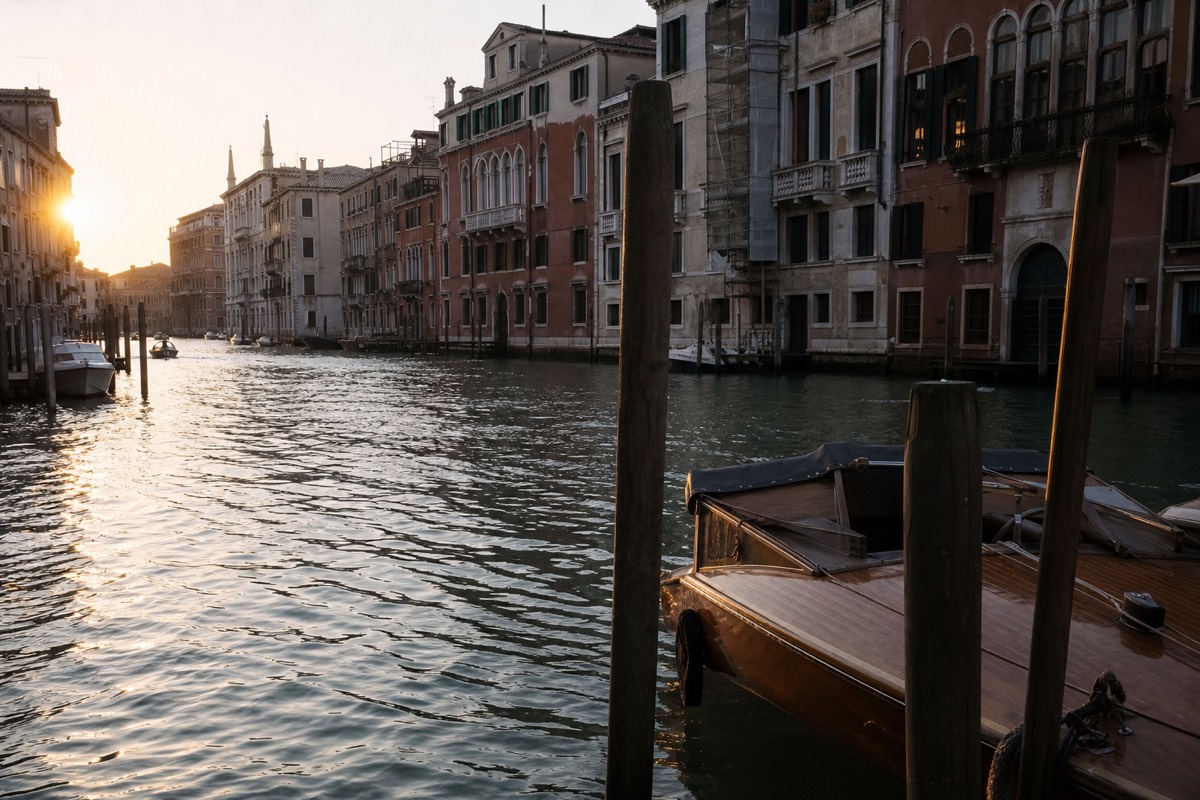
Two ways to shape an Italy trip
Nights per city on the seven and ten day shapes most first-timers book. Add days to the right, do not squeeze more into a week.
How Many Days Do You Actually Need To See Italy?
Seven days is enough for a first trip built around the big three cities, Rome, Florence and Venice, moving at a steady pace, while ten days keeps all three and adds a southern leg such as Naples, Pompeii or the Amalfi Coast, or simply hands you room to slow down. The mistake first-timers make is treating Italy as a single stop when it is really three regions in a row. Rome is ancient and sprawling, Florence is compact and Renaissance, Venice is small and slightly unreal, and each one asks for a different rhythm.
The questions people type before a trip say the same thing. They cluster around length rather than lists: how many days is enough to see Italy, is seven days enough, is ten days too much. Honestly, seven days is not quite enough time to see Italy end to end, but it is plenty for the classic spine done properly. When you have the extra three days, you spend them going deeper, not faster.
Distance works in your favour here. Naples, Rome, Florence, Bologna and Venice all sit on one high-speed rail line running up the middle of the country, so hopping between the big three cities is a short train ride rather than a lost travel day. That single fact is what lets both the seven and the ten day plans work with no hire car and no internal flights.
The Classic 7-Day Italy Route: Rome, Florence, Venice
A comfortable seven-night shape is three nights in Rome, two in Florence and two in Venice, spanning eight calendar dates, travelling north in one direction so you never double back, with a fast train linking each city in around two hours or less. Rome comes first because it needs the most time and because most long-haul flights land there. Florence sits in the middle, an easy hour and a half up the line. Venice closes the trip, and flying home from Venice saves you a backtrack.
Three nights in Rome gives you one day for ancient Rome, one for the Vatican, and an evening or two for the historic centre, which is about the honest minimum. If you are weighing the exact figure, our guide to how many days you need in Rome breaks the trade-offs down hour by hour. Whatever you decide, the ancient sites and the Vatican both need advance tickets, so book those before the trip rather than at the gate.
Florence is the middle act, and it is small. You can cross the historic centre on foot in twenty minutes, so two nights comfortably covers the Duomo, Michelangelo's David at the Accademia, the Uffizi and a sunset from Piazzale Michelangelo. Venice then earns one full day for St Mark's Square and the back canals, plus a quieter second morning for the islands or the Doge's Palace before you leave. If you would rather not touch a ticket machine, the Classical Italy tour books exactly this Rome to Florence to Venice line as one trip.
The seven-day version below uses three Rome nights, two Florence nights and one Venice night, departing on day seven.
| Day | Base | Focus |
|---|---|---|
| 1 | Rome | Arrive, settle in, evening walk past the Pantheon and a floodlit Trevi Fountain |
| 2 | Rome | Ancient Rome: the Colosseum, Roman Forum and Palatine Hill |
| 3 | Rome | Vatican Museums, Sistine Chapel and St Peter's, dinner in Trastevere |
| 4 | Florence | Morning fast train, afternoon Duomo, Ponte Vecchio, sunset at Piazzale Michelangelo |
| 5 | Florence | The Accademia and Uffizi, or a half-day into the Tuscan hills |
| 6 | Venice | Fast train up, afternoon in St Mark's Square and the Rialto lanes |
| 7 | Venice | Quiet morning on the islands or the Doge's Palace, then depart |
What A 10-Day Italy Itinerary Adds
Ten days lets you hang a southern leg onto the same rail spine, most often Naples with Pompeii and a run along the Amalfi Coast, arranged north to south so every hop is a short ride down one line rather than a backtrack. The cleanest ten-day shape starts in Venice and works south: Venice, then Florence, then Rome, then Naples and the coast, flying home out of Naples. Because the high-speed line runs straight down the peninsula, you are never retracing your route.
The alternative keeps the northern trio and adds Tuscany from Florence, which suits travelers who would rather have hill towns and wine than a fourth region. Either way, the extra three days are the difference between a highlights reel and a trip you actually remember slowing down on.
The south is where those days earn their keep. A Pompeii day trip drops you into a Roman city frozen in 79 AD, and the drive out of Sorrento along the Amalfi Coast, past Positano, Amalfi and Ravello, is the scenery most people picture when they think of southern Italy. For the full logistics of getting from Rome to the Amalfi Coast, our transport guide covers the train, the ferry and the private transfer options side by side.
Laid out day by day, a ten-day north-to-south trip looks like this.
| Day | Base | Focus |
|---|---|---|
| 1 | Venice | Arrive, evening along the Grand Canal |
| 2 | Venice | St Mark's Square, the Doge's Palace, a vaporetto out to Murano or Burano |
| 3 | Florence | Fast train down (about 2 hours), afternoon in the Renaissance centre |
| 4 | Florence | The David and the Uffizi, or a Tuscan day to Siena and San Gimignano |
| 5 | Rome | Fast train down (about 1h30), afternoon in the historic centre |
| 6 | Rome | Ancient Rome: Colosseum, Forum and Palatine Hill |
| 7 | Rome | Vatican Museums, Sistine Chapel and St Peter's |
| 8 | Naples / Sorrento | Fast train to Naples (about 1h10), Pompeii en route, on to a Sorrento base |
| 9 | Sorrento | The Amalfi Coast drive, or a boat day to Capri and the Blue Grotto |
| 10 | Naples | Naples old town or a slow morning, then fly home from Naples |
The three add-ons travelers reach for most break down like this, and each one bolts onto the southern end of the trip without disturbing the northern spine.
| Extension | Adds | Best base | Best for |
|---|---|---|---|
| Amalfi Coast (Positano, Amalfi, Ravello) | 2 to 3 days | Sorrento | Cliffside scenery and slow coastal days |
| Naples & Pompeii | 1 to 2 days | Naples | Ancient ruins and the pizza that city invented |
| Tuscany (Siena, San Gimignano) | 1 to 2 days | Florence | Hill towns and wine, with no new long train |
| Capri & the Blue Grotto | 1 day | Sorrento or Naples | An island day trip off the southern coast |
Notice that only Tuscany hangs off the north. Everything else clusters around Naples, which is why the north-to-south order is so tidy: you do the cities, then you drop to the coast and stay there. Trying to fit both Tuscany and the Amalfi Coast into ten days is the one combination that starts to feel like a race again.
How Much Time Does Each City Actually Need?
Rome needs three nights, Florence and Venice want two each, and any southern base wants two to three, so a three-plus-two-plus-two night itinerary spans eight calendar dates, with the extra city stacked on for ten days. The numbers are not arbitrary. They come from how the sights are spread and how far apart they sit inside each city.
Rome is the outlier because ancient Rome and the Vatican are two separate full days that barely touch, with the historic centre a third pass in between. Florence and Venice reward you for going slow but do not demand it, since both cores are small enough to walk. The table below is the planning shortcut most of our travelers end up using.
| City | Minimum | Ideal | Why |
|---|---|---|---|
| Rome | 3 nights | 3 to 4 nights | Two heavyweight days (ancient Rome, the Vatican) plus the centre; the biggest of the three |
| Florence | 1 to 2 nights | 2 nights | Compact centre; the David, the Uffizi and the Duomo, with Tuscany optional |
| Venice | 1 to 2 nights | 2 nights | Small and walkable; one full day for the core, a calmer second for the islands |
| Naples / Amalfi | 2 nights | 3 nights | Pompeii and the coast each want most of a day, and a fixed base saves backtracking |
The temptation is always to add a fourth or fifth city. Resist it on a single week. The travelers who come home happiest are the ones who gave Rome its full three nights and treated the big three cities as the whole trip rather than a checklist to speed through. Where you sleep matters too: choosing well on where to stay in Rome decides how much of each day you lose to getting across town.
Getting Between The Cities Without A Car
Fast trains connect all three cities in under two hours a leg, Rome to Florence in about an hour and a half and Florence to Venice in around two hours, so you plan the trip around train departures rather than driving distances. For these distances the train beats both flying and driving once you count airport time, security and parking. A car is worse than useless in the three historic centres, where much of the core is a restricted traffic zone and parking is punishing.
Two operators run the high-speed services, the national Trenitalia with its Frecciarossa trains and the private Italo. Both leave from the main city stations and both post cheaper fares the earlier you book. The full breakdown of times, stations and how to book sits in our guide to Rome to Florence and Venice by train, and the short version is in the table below.
| Leg | Fast-train time | Notes |
|---|---|---|
| Rome to Florence | about 1h30 | Roma Termini to Firenze Santa Maria Novella, mostly non-stop |
| Florence to Venice | about 2h | To Venezia Santa Lucia, the station on the island itself |
| Rome to Venice direct | about 3h45 | One line the whole way; useful if you skip Florence |
| Rome to Naples | about 1h10 | The gateway south to Pompeii and the Amalfi Coast |
Book a few weeks ahead on Trenitalia or Italo and the low advance fares are yours; leave it to the day and you pay the walk-up price, which can be several times higher. Reserve seats together if you are travelling as a group, since the cheapest fare tiers sell out first.
Which Done-For-You Package Matches Your Dates?
If you would rather not book several hotels and a stack of train tickets, a single multi-day package covers the same route with the transfers, guides and rooms already arranged, from a five-day Rome to Venice run to a seven-day southern loop. The right one usually comes down to how many days you have and which region you care about most.
The team at Rome Tour Packages books these routes most weeks, and the fit is rarely complicated. The Classical Italy tour is the five-day version of the northern spine, Rome to Florence to Venice, and it suits a first trip focused on that northern route; compare current quotes rather than relying on an old starting price.
For the south, the seven-day Rome and Amalfi tour pairs a couple of nights in Rome with four on the Sorrento coast and the cliffside drive past Positano and Ravello. If you would rather start below Rome, the Italy in a Week run opens in Naples with Pompeii, Vesuvius and Capri before finishing in the capital. Transport varies by itinerary: Classical Italy uses a coach rather than the independent high-speed rail plan.
One line to plan around: city-tax inclusions vary by package and hotel; check the exact quote for taxes payable locally. Factor that in when you weigh a package price against booking piecemeal. The four-day Explore Italy highlights route is the shortest option and the most scenic between Florence and Venice, threading Assisi, Siena, Pisa and Bologna into the middle of the trip.
| Package | Days | Route | From |
|---|---|---|---|
| Classical Italy Tour | 5 | Rome, Florence, Venice | Check the current party quote |
| Explore Italy Highlights | 4 | Assisi, Siena, Florence, Pisa, Bologna, Venice | Check the current party quote |
| Italy in a Week: Naples & Rome | 7 | Naples, Pompeii, Vesuvius, Capri, Rome | Check the current party quote |
| 7-Day Roman Grandeur & Amalfi Coast | 7 | Rome, Sorrento, Amalfi Coast | Check the current party quote |
When to go shapes all of this. The shoulder months, roughly April to June and September into October, hand you the light and the elbow room without the August heat, and our note on the best time to visit Rome carries the month-by-month detail, which holds for Florence and Venice too. Whenever you travel, book Venice first, since the island fills before the mainland does.
Common Mistakes On A First Italy Trip
The trip-killers are almost always the same three: too many cities in too few days, a hire car in cities that ban them, and back-loading Rome so you run out of time for its biggest sites. None of them are hard to avoid once you know they are coming, and every one of them is a lost half-day you cannot get back.
Overpacking the map is the big one. Adding Cinque Terre, Milan and the Lakes to a seven-day plan looks ambitious on paper and feels like a coach tour in practice, with more time on platforms than in piazzas. Keep a week to three cities and a fourth only if you drop one of the others. Most of the other tourist mistakes worth avoiding in Italy are small, missing the modest-dress rule at the Vatican and St Peter's, not validating a regional ticket, sitting down for a coffee you thought was takeaway priced, but they add up.
The last one is a timing trap. People arrive tired, spend day one wandering, and discover that the Colosseum and the Vatican both need timed tickets they have not booked. Sort the paid, timed sites first and let the free wandering fill the gaps. If you want the shortlist of what to prioritise, our rundown of the best things to do in Rome sorts the unmissable from the skippable so you spend the mornings well.