Getting Around Rome + From Fiumicino Airport
Rome is a walking city with a metro grafted on and a bus network filling the gaps, so most days you move on foot and reach for a train only for the longer hops or the airport run. Here is how the metro, buses, taxis and airport links actually fit together, with real times and honest guidance on fares.
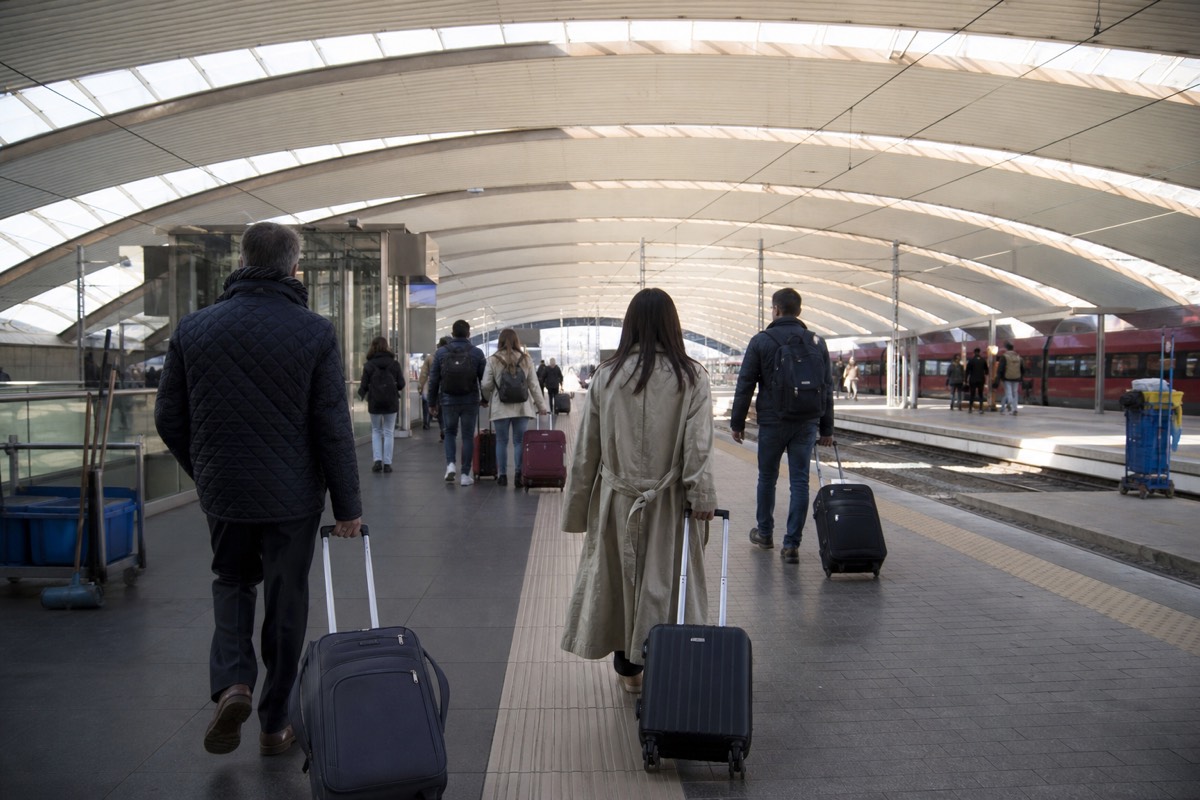
Fiumicino to the city, compared
Times are typical door-to-platform journeys; fares are indicative and change, so treat them as a guide and check current pricing.
What Is The Best Way To Get Around Rome?
The best way to get around Rome is on foot through the historic center, using Metro lines A and B for longer crossings, buses and trams for the gaps the metro misses, and the Leonardo Express train for the airport, with licensed white taxis as a backup. The center is compact and half the pleasure is stumbling on a fountain or a ruin between the sights you planned, so walking is not a fallback here, it is the main event. The metro is fast but limited, because so much of ancient Rome sits protected underground that the network had to route around it.
Think in layers. Walk anything under about twenty-five minutes inside the center. Take the metro when you are crossing the city, from Termini out to the Vatican, say, or down to the Colosseum. Use buses and trams for the pretty parts the metro cannot reach, like the Pantheon and Trastevere. Save taxis for late nights, heavy bags and the airport. The table below sets out what each mode is genuinely best at.
| Mode | Best for | Typical speed | Cost feel |
|---|---|---|---|
| Walking | The historic center, short hops | Fastest door-to-door in the core | Free |
| Metro (A, B, C) | Crossing the city quickly | Very fast, limited coverage | Low |
| Bus and tram | Pantheon, Trastevere, Vatican | Slower in traffic, wide reach | Low |
| Taxi / ride-hailing | Nights, luggage, airport | Quick off-peak, slow in traffic | Higher |
| Leonardo Express | Fiumicino airport to Termini | About 32 minutes nonstop | Fixed train fare |
One decision shapes all of this before you arrive: where to stay in Rome. A central base near the Pantheon or Monti means you walk most days and barely touch the network, while a room out by the ring road makes the metro part of your daily routine.
The Rome Metro: Lines A, B And C
Rome's metro has three lines, A (orange), B (blue) and C (green), running roughly 5:30am to 11:30pm and later on weekend nights; lines A and B cross at Termini, and the newest line C now reaches the historic center at the Colosseo interchange, though the network deliberately skirts much of the old core. For visitors, lines A and B do nearly all the useful work. Line C is a modern addition that has been extended into the center in stages, held up for years by the archaeology crews find every time they dig.
The key thing to grasp is what each line connects, because the metro's value is entirely about whether it happens to stop near where you want to go. It shines for long crossings and disappoints for the tangle of lanes around the Pantheon, which no line reaches.
| Line | Colour | Key stops for visitors | Use it for |
|---|---|---|---|
| Line A | Orange | Termini, Spagna (Spanish Steps), Ottaviano (Vatican) | Historic center edge to the Vatican |
| Line B | Blue | Termini, Colosseo, Circo Massimo | Ancient Rome, the Colosseum |
| Line C | Green | San Giovanni, Colosseo / Fori Imperiali | Eastern suburbs into the center |
Termini is the hinge of the whole system, the one point where A and B meet, and it is also where you catch the airport train and long-distance rail, which is part of why so many first-timers choose to sleep nearby. From the Colosseo stop on Line B you step out almost at the arena, so if you have skip-the-line at the Colosseum booked, the metro drops you within sight of the gate.
In practice the metro is easy to use. Trains run every few minutes through the day and stretch to wider gaps late at night, platforms show the wait, and the same ticket or contactless tap gets you through the gates. One honest caveat: some of the older stations lack lifts or step-free access, so travellers with heavy cases or mobility needs should check ahead or lean on the surface buses, which kneel at the kerb. Rome is not a metro-first city the way London or Paris is, and you will spend far more time on foot than underground, but for the long crossings the two main lines save real time.
Buses, Trams And The Routes The Metro Misses
Rome's buses and trams, run by ATAC, cover the parts of the center the metro cannot, including the Pantheon, Piazza Navona, Trastevere and the walk-averse stretch to the Vatican, and they use the same ticket as the metro so you can switch freely within its time window. If the metro is the express skeleton, the surface network is the connective tissue. It is slower, because Rome traffic is Rome traffic, but it goes where the pretty parts are.
A few routes earn their keep for visitors. Tram 8 runs from the Piazza Venezia area across the river into Trastevere, the easiest rail-based way into that neighbourhood. Buses like the 40 and 64 shuttle between Termini and the Vatican through the center, handy but notoriously crowded, which also makes them a favourite hunting ground for pickpockets, so keep your bag zipped and in front of you. Always validate a paper ticket in the machine when you board, or tap a contactless card at the reader, because inspectors do check and the fine dwarfs the fare. Buses thin out late at night, when a network of night routes takes over and a taxi often makes more sense.
Tickets And Passes: What To Buy
Rome uses one integrated ticket across the metro, buses and trams, sold as a single 100-minute ride (the BIT) or as 24-hour, 48-hour, 72-hour and weekly passes, with prices in the low single-digit euros for a single and rising from there; check current pricing before you travel, as fares change. The single ticket is the building block: it lets you take one metro journey plus unlimited bus and tram transfers within the time window, so short trips rarely need anything fancier. Compare your expected separate ticket charges with the day-pass price before buying.
You can buy tickets at metro stations, tobacconists, newsstands and from machines, and most metro gates now accept a contactless tap of a bank card, which charges you the single fare automatically. The table gives the rough shape of the options so you can pick before you land.
| Ticket | Covers | Rough price | Best for |
|---|---|---|---|
| Single (BIT) | 100 min: one metro ride plus surface transfers | Around €1.50, check current pricing | Occasional short hops |
| 24-hour pass | Unlimited metro, bus, tram for a day | €8.50, checked September 2026 | A busy sightseeing day |
| 48 / 72-hour pass | Unlimited travel for two or three days | €15 / €22, checked September 2026 | Multi-day metro users |
| Weekly pass (CIS) | Seven days of unlimited travel | €29, checked September 2026 | Longer stays out from the center |
Because so much sightseeing happens on foot, plenty of visitors get by on singles alone. Match the ticket to how you actually plan to move, which ties back to how many things to do in Rome sit within walking distance of your base.
One more option is worth weighing: the Roma Pass, sold as a 48-hour or 72-hour card, bundles unlimited public transport for its window with free entry to a first museum or site and discounts after that. Whether it saves money depends entirely on how many paid sights you plan to visit, so add up your intended entries first, and check current pricing, since the pass is repriced from time to time. For a transport-only trip the plain travel passes are simpler; for a sight-heavy few days the combined card can come out ahead.
Walking The Centre, And When Not To
Walking is the fastest and most enjoyable way to cover Rome's historic center, where the major sights cluster within fifteen to twenty-five minutes of one another, though the cobblestones, summer heat and the longer stretch out to the Vatican are worth planning around. The distances surprise people. The gap between the Colosseum and the Pantheon looks daunting on a map and takes about twenty minutes in reality, past three or four other sights along the way. These are the honest on-foot times between the landmarks you will actually string together.
| Route on foot | Time | Notes |
|---|---|---|
| Termini to Colosseum | 15-18 min | Or two stops on Metro B, via Cavour |
| Colosseum to Trevi Fountain | 14-16 min | Uphill in places |
| Trevi Fountain to Pantheon | 5-7 min | Always busy |
| Pantheon to Piazza Navona | 4-5 min | Flat, quick |
| Piazza Navona to St Peter's | 25-30 min | Or a short bus ride |
Wear real shoes, not new sandals, because sampietrini, the little basalt cobbles, punish thin soles. In July and August, walk early and late and rest through the shadeless middle of the day. This is also the mode that makes a compact plan work, so anyone following a three days in Rome route will spend most of it on foot, dipping into the metro only for the Vatican and the odd longer jump.
Taxis, Ride-Hailing And Staying Scam-Safe
Use only the official licensed white taxis in Rome, which are metered and carry set fixed fares to and from the airports, and ignore anyone who approaches you offering a ride at the station or airport, since unlicensed touts are the most common transport scam. Legitimate cabs are white, display a taxi sign and a licence number, and start the meter at a set rate. You can hail one at a rank, book by app or ask a bar or hotel to call one. Ride-hailing apps operate in Rome too, though they often dispatch those same licensed taxis rather than private drivers.
The scams are the ordinary big-city kind, and a little awareness handles them. Refuse any driver who waves you over inside the terminal or won't run the meter on a metered trip, watch for the "broken" meter that suddenly costs triple, and keep small notes handy so you are not overpaying on change. For a fuller rundown of these and the pickpocketing hotspots, our guide on whether Rome is safe and the common scams goes deeper. The reassuring part is that the airport runs, where tourists feel most exposed, are protected by official fixed fares, so there is a right number and you can hold drivers to it.
Leaving Rome: Trains To The Rest Of Italy
Rome is Italy's rail hub, with high-speed trains from Termini reaching Florence in about an hour and a half, Naples in around an hour and ten minutes, and Venice in under four hours, which makes the city an easy launchpad for day trips and multi-city routes without ever touching a car. The station you use for the airport train is the same gateway to the rest of the country. High-speed services are frequent, comfortable and worth booking a little ahead for the best fares, while regional trains cost less, need no reservation, and serve the closer towns.
These times are why so many visitors tack a second city onto a Rome trip. A morning train has you in Florence for lunch, or in Naples in time to reach Pompeii by early afternoon. For the coast, the fast line runs down to Salerno, the usual jumping-off point for how to reach the Amalfi Coast by ferry or road. The table gives the rough journey times, run by Trenitalia and other operators, all frequent and all bookable in advance.
| From Rome to | Fast train | Good for |
|---|---|---|
| Florence | About 1h30 high-speed | Renaissance day trip or multi-city loop |
| Naples | About 1h10 high-speed | Naples, Pompeii, the south |
| Venice | Under 3h45 high-speed | The classic three-city route |
| Salerno | About 2h high-speed | Gateway to the Amalfi Coast |
| Orvieto or Tivoli | 1h to 1h30 regional | Closer half-day escapes |
Book high-speed trains ahead to compare fares. Validate paper regional tickets where required; Trenitalia Digital Regional Tickets validate automatically at the scheduled departure of the selected train. Allow time to find your platform at Termini. With these links, the best day trips from Rome, and even a coast add-on, are genuinely doable as day returns or short hops, no rental car required.
From Fiumicino And Ciampino Airports To The City
From Fiumicino, the Leonardo Express train runs nonstop to Roma Termini in about 32 minutes, departing roughly every 15 minutes, while a licensed taxi charges a fixed official fare of €55 per ride to addresses within the Aurelian Walls; from the smaller Ciampino, shuttle buses reach Termini in about 40 minutes and the fixed taxi fare is €40 per ride to addresses within the Aurelian Walls. Which airport you land at changes the drill entirely, so it helps to know your options before you clear the baggage hall. Fiumicino, the main international gateway, is the better connected of the two.
At Fiumicino you have a genuine choice. The Leonardo Express, run by Trenitalia, is the simplest if Termini suits you, a fast nonstop shot into the center. If your hotel sits nearer Trastevere or the southern districts, the cheaper FL1 regional train is worth knowing, though it stops at Trastevere, Ostiense and Tiburtina rather than Termini. A fixed-fare taxi takes you door to door for a set price regardless of traffic, which is the least stressful option after a long flight.
| Option from Fiumicino | Time | Rough cost | Arrives at |
|---|---|---|---|
| Leonardo Express (nonstop) | About 32 min | Around €14, check current pricing | Roma Termini |
| FL1 regional train | About 30-48 min | Around €8, check current pricing | Trastevere, Ostiense, Tiburtina |
| Licensed taxi (fixed fare) | 45-60 min in traffic | Around €55 fixed, check current pricing | Your door, inside the walls |
| Private transfer | Varies with route and traffic | Varies by operator | Agreed address or nearby accessible drop-off |
Ciampino is smaller and has no train at the terminal itself, so the routine differs.
| Option from Ciampino | Time | Rough cost | Arrives at |
|---|---|---|---|
| Shuttle bus (direct) | About 40 min | Around €6, check current pricing | Roma Termini |
| Bus to Ciampino station, then train | About 40-50 min total | Bus plus regional fare | Roma Termini |
| Licensed taxi (fixed fare) | 30-45 min in traffic | Around €40 fixed, check current pricing | Your door, inside the walls |
For a prebooked transfer, confirm the airport, arrival time and actual drop-off point. Central traffic restrictions can mean meeting or leaving the vehicle a short walk from your accommodation. The same airport links carry you back out to the wider country, too, so the small skills you pick up moving around the city, tapping through a gate, reading a platform board, keeping your bag in front of you, travel with you for the rest of the trip.