What Are The "Big 3" Cities To See In Italy?
Ask ten guidebooks for a first Italy trip and nine name the same trio. The big three are Rome, Florence and Venice, and they earn the shortlist because each one does a completely different thing.
What Are The "Big 3" Cities To See In Italy?
The big three cities in Italy are Rome, Florence and Venice, the trio nearly every first-time itinerary is built around because each covers a different era and mood: Rome is ancient and monumental, Florence is Renaissance and compact, and Venice is a car-free maze of canals. They also happen to sit on the same high-speed rail line, so seeing all three in one trip is easy rather than ambitious.
The label is not official, just the shorthand travelers and guides land on, and it holds up because these three cover the widest span of what Italy is famous for with the least backtracking. String them together and you get two thousand years of history, the birthplace of the Renaissance, and one of the strangest, loveliest cities on earth, all in a single week.
Rome: Ancient History At Full Scale
Rome is the big, monumental one, the city of the Colosseum, the Roman Forum, the Pantheon and the Vatican, and it needs the most time of the three because its headline sights are spread across separate full days. Ancient Rome alone is one day; the Vatican, with the museums, the Sistine Chapel and St Peter's, is another; and the historic centre of piazzas and fountains fills whatever is left.
It is also the loudest and the largest, a working capital rather than a museum piece, which is part of its appeal and part of why people either love it first or warm to it slowly. Most long-haul flights land here too, so Rome is usually where an Italy trip begins. If you are weighing the stay, our guide on how many days you need in Rome makes the case for three nights as the honest minimum.
Florence: The Renaissance In A Walkable City
Florence is the art city, small enough to cross on foot in twenty minutes, home to Michelangelo's David, the Uffizi, and Brunelleschi's dome over the Duomo, which is why two nights covers it comfortably. After Rome's scale, Florence feels like an exhale: everything is close, and the reward for wandering is stumbling onto a Renaissance masterpiece around an ordinary corner.
It is the middle act for a reason. Florence sits almost exactly halfway between Rome and Venice on the rail line, so it breaks the journey naturally. Give it a sunset from Piazzale Michelangelo, looking back over the red-tiled roofs and the dome, and most people quietly rank it their favourite of the three.
Venice: A City Built On Water
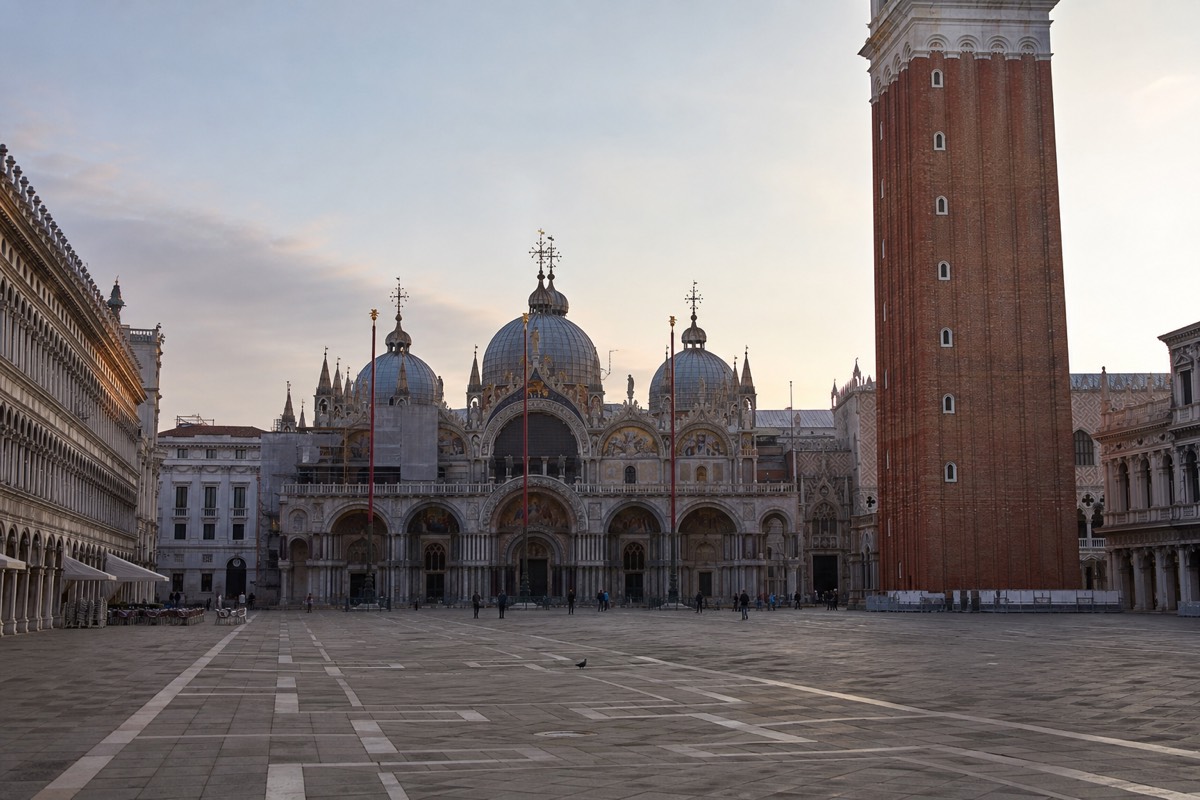
Venice is the one built on water, a car-free cluster of islands laced with canals, where St Mark's Square, the Grand Canal and the back-lane bridges are the whole point, and where getting lost is the recommended activity. There is nowhere else quite like it, and two nights is enough to feel its rhythm: one full day for the landmarks, a quieter morning for the outer islands or the emptier lanes.
Because it is compact and there are no roads, Venice runs on your feet and the vaporetto water buses. It closes an Italy trip well, partly because arriving by train drops you straight onto the Grand Canal, and partly because after the ancient and the Renaissance, the surreal is a good note to end on.
How Do The Big Three String Together?
The three link into one clean trip along a single high-speed line: Rome to Florence in about an hour and a half, Florence to Venice in around two hours, travelling in one direction so you never double back. Start in Rome, stop in Florence, finish in Venice, then fly home from Venice, or run the exact reverse if your flights suit it.
That is the whole logistical trick, and it is why the trio became the standard. The full breakdown of times, stations and fares is in our guide to Rome to Florence and Venice by train, but the headline is that you are never more than a short ride from the next city, with no car and no internal flight required.
| City | Known for | Nights |
|---|---|---|
| Rome | Ancient ruins, the Vatican, big-city energy | 3 |
| Florence | Renaissance art, the Duomo, walkable centre | 2 |
| Venice | Canals, St Mark's, a car-free island city | 2 |
Should The Big Three Be Your Whole Trip?
For a first visit of a week, yes: Rome, Florence and Venice make a complete, unhurried trip, and adding a fourth city usually costs you more than it gives. Three plus two plus two is seven nights across eight calendar dates; for a seven-day trip, reduce a night and allow for your flights.
If you have ten days, that is when a fourth stop earns its place, most often a southern leg like Naples and the Amalfi Coast, added on so the trip runs north to south down one line. Honestly, seven days is not quite enough time to see Italy end to end, but it is ample for the big three done well, and the day-by-day version lives in our full Italy itinerary guide.
If you would rather not book three hotels and a stack of train tickets, the team at Rome Tour Packages lists an organized coach version of this route. The Classical Italy tour is the done-for-you version of the big three, Rome to Florence to Venice with the moves, guides and rooms handled, so you arrive and get shown around rather than plan and navigate.